
1. The Statutory Framework: Construction Regulation 24 & SANS 10142-1
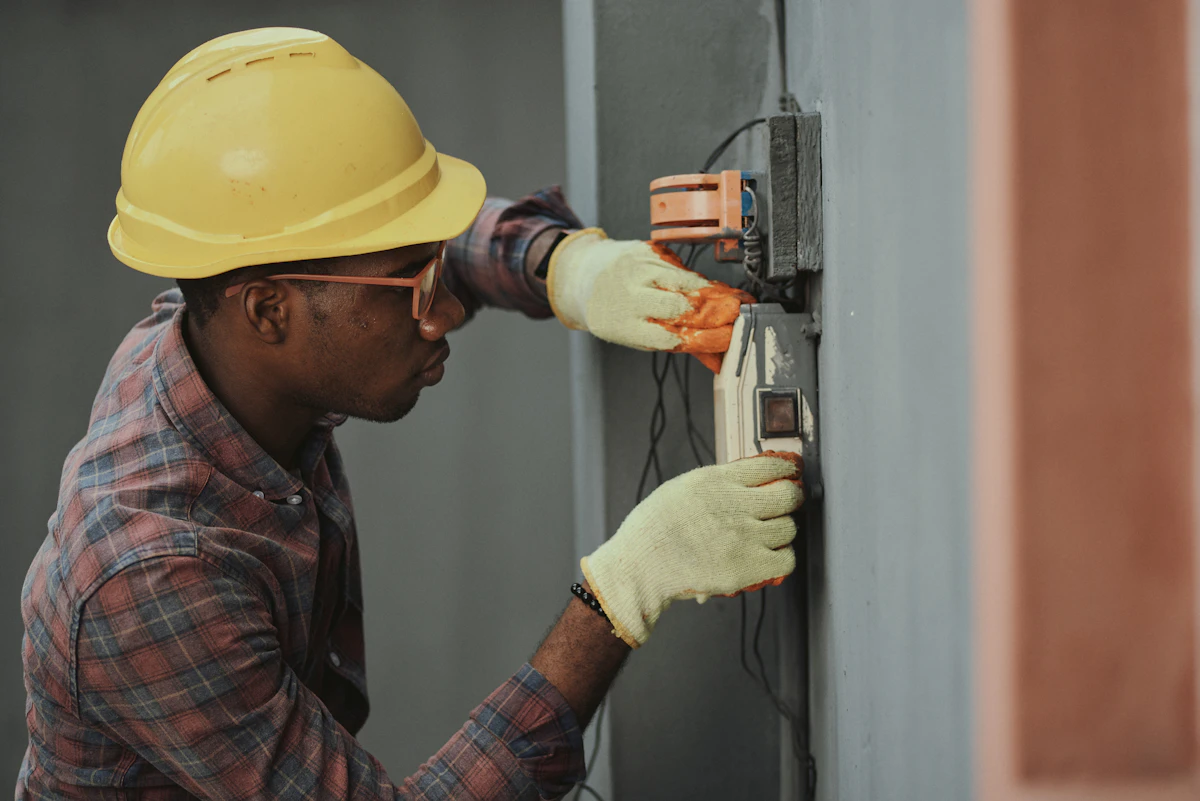
A construction site is a harsh, wet, highly abrasive electrical environment. Power cables are dragged across rough concrete rubble, run over by heavy plant machinery, and exposed to torrential rainstorms and puddles. A damaged extension lead or an ungrounded temporary distribution board creates an immediate risk of fatal electrocution or electrical arc-flash explosion.
Under Construction Regulation 24 (CR 24) of the Occupational Health and Safety Act (Act 85 of 1993) and SANS 10142-1 (The Code of Practice for the Wiring of Premises - Section 7: Construction and Demolition Site Installations), the law imposes strict engineering controls.
CR 24(1) mandates that an employer must ensure that all temporary electrical installations are inspected at least once a week by a competent person appointed in writing, and all portable electric tools are logged in a monthly inspection register.
Construction Electrical Safety Benchmarks
2. Temporary Distribution Boards: IP65 Ratings & 30mA Earth Leakage
Temporary site distribution boards (DBs) must be engineered to withstand severe weather and physical abuse.
Under SANS 10142-1 Section 7, temporary DBs must be housed in heavy-duty IP65 weatherproof enclosures, elevated at least 1.0 metre off the ground on sturdy steel stands (never resting in mud puddles), fitted with a lockable door, and carry prominent 400V / 230V Danger Warning Signage.
Crucially, 100% of socket-outlets must be protected by sensitive 30mA Earth Leakage Circuit Breakers (ELCBs). Bypassing or bridging an earth leakage relay to stop an angle grinder from tripping is a criminal offense under Section 14 of the OHS Act.
Construction Site Electrical Standards & SANS Requirements
| Electrical Installation Component | SANS / CR 24 Technical Requirement | Common Dangerous Site Violation | Mandatory Corrective Control |
|---|---|---|---|
| Temporary Distribution Board | IP65 enclosure, locked door, 1m elevation, main isolator switch. | Open DB doors with exposed live busbars, resting on wet ground. | Weatherproof locked cabinet with clear circuit legend schedule. |
| Extension Cables & Leads | Heavy-duty rubber cabtyre (H07RN-F), industrial 3-pin blue plugs. | Domestic thin PVC 2-core cords joined with insulation tape. | Continuous single-length industrial cabtyre; banned taped joints. |
| Portable Power Tools | Double-insulated (Square-in-Square symbol) or earthed casing. | Cracked casing, missing earth pins, bypassed safety trigger locks. | Monthly continuity inspection, numbered asset tags, colour-coded tape. |
| Overhead Powerline Interface | Minimum 6.0m clearance buffer, goalpost warning barriers. | Excavator booms or crane jibs swinging within 3m of live 11kV lines. | Install timber goalposts, bunting flags, and ground spotters. |
3. Portable Electric Tool Testing, Tagging & Double-Insulated Cords
Under CR 24(2), all portable electrical tools - disc grinders, SDS hammer drills, circular saws, welding machines, and extension leads - must undergo monthly documented inspections by an appointed competent person.
Site safety governance utilizes a Monthly Colour-Coding System (e.g. Red, Blue, Green, Yellow) to visually tag compliant tools. Any tool discovered on site without that month's designated colour tag is immediately confiscated and quarantined.
Taped cable joints and damaged plugs are strictly prohibited. Damaged cables must be spliced using certified vulcanized resin joints or replaced entirely.
4. Overhead Powerline Clearances & Underground Cable Striking Hazards
Operating mobile cranes, concrete boom pumps, scaffolding, and tipper trucks near live overhead Eskom or municipal powerlines carries severe electrocution risks from electrical arcing.
Under the Electrical Machinery Regulations, all machinery must maintain a minimum safety clearance buffer: 3.0 metres for lines up to 11kV, 4.5 metres for lines up to 66kV, and 6.0 metres for lines exceeding 132kV.
Contractors must erect physical High-Visibility Goalpost Warning Barriers at road crossings to prevent tipper trucks and excavators from contacting live overhead lines.
5. 5-Stage Temporary Electrical Installation & Testing Roadmap
Designate a registered Installation Electrician or qualified electrician to oversee site power.
Mount DBs on steel stands 1m above ground, install 30mA earth leakage relays, and connect to earthing rod.
Test earth continuity, insulation resistance (>1 MOhm), and verify 30mA earth leakage trip times (<300ms).
Audit all grinders, drills, and extension leads; record in the Portable Tool Register and apply monthly colour tags.
Install timber goalposts beneath overhead lines and conduct weekly electrical walkthrough audits.
6. Site Electrical Installation & Tool Compliance Checklist
- Temporary electrical installation is certified with a valid SANS 10142-1 Certificate of Compliance.
- Competent Temporary Electrical Inspector is appointed in writing under Construction Regulation 24(1).
- Temporary DBs are IP65 weatherproof, locked, elevated 1.0m off the ground, and labelled with danger signs.
- 100% of socket-outlets are protected by functioning 30mA earth leakage relays tested weekly.
- All portable electric tools and extension leads display current monthly colour-coded inspection tags.
- Zero taped cable joints or damaged 3-pin industrial plugs are present anywhere on site.
- Overhead powerline goalposts and clearance warning banners are installed along all vehicle routes.